Dental Implants in Sydney: A Complete Guide
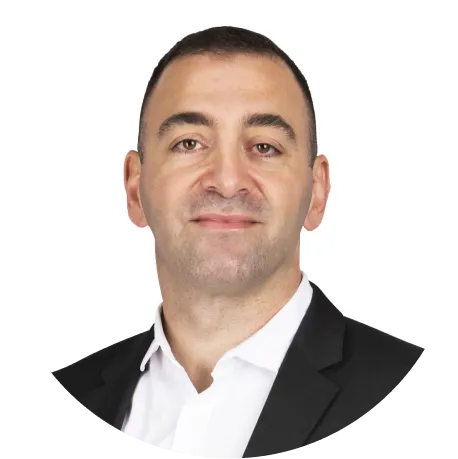
A dental implant is a small titanium or zirconia post placed in the jawbone to replace the root of a missing tooth. Once it has bonded with the bone, it supports a crown, bridge or full arch of teeth. At Dental Implants Australia in Balmain, every implant is planned and placed by implant expert Dr Saade Saade, with single implants from $5,000.
What is a dental implant?
An implant has three parts:
- The implant – a titanium or zirconia post that sits in the jawbone where the tooth root used to be.
- The abutment – a connector that joins the implant to your new tooth.
- The restoration – a crown, bridge or full-arch bridge made to match your smile.
Because an implant replaces the root as well as the tooth, it doesn’t rely on the neighbouring teeth for support, the way a conventional bridge does.
Which treatment do you need?
| Your situation | Usual treatment | From |
|---|---|---|
| One missing tooth | Single tooth implant | $5,000 |
| Several missing teeth | Implants or an implant bridge | $5,000 per implant + $1,600 per extra tooth |
| All teeth missing or failing – fixed teeth | Teeth-on-4 full arch | $20,000 per jaw |
| All teeth missing – removable option | Implant-retained denture | $6,000 |
| Prefer metal-free treatment | Zirconia implants | Quoted at consultation |
| Told you don’t have enough bone | Bone grafting or sinus lift | Quoted at consultation |
Are you suitable for implants?
Most adults with healthy gums and enough jawbone are suitable. A 3D CBCT scan, included in your free consultation, shows exactly how much bone you have. If there isn’t enough, bone grafting, a sinus lift or angled implants can often make treatment possible. Smoking, uncontrolled diabetes, gum disease and some medications can affect healing, so we’ll go through your medical history first.
The treatment process
- Free consultation. 30–60 minutes with Dr Saade, including a 3D CBCT scan, an assessment and a written fixed-fee estimate.
- Digital planning. Digital scans and guided-surgery planning place each implant precisely.
- Implant placement. Usually under local anaesthetic. IV sedation, provided by a visiting sedationist, is available.
- Healing. Typically 3–6 months while the implant bonds with the bone. Where appropriate, a temporary tooth can be fitted on the same day.
- Your new tooth or teeth. A custom crown, bridge or arch is fitted. Many crowns can be made in-house with CEREC.
- Reviews and maintenance. Regular check-ups keep your implants healthy.
Benefits and limitations
Benefits: implants are fixed in place, don’t rely on neighbouring teeth for support, help preserve the jawbone where a tooth is missing, and are cleaned much like natural teeth.
Limitations: treatment involves surgery and several months of healing; it costs more than a denture or conventional bridge; not everyone is suitable without grafting; and implants need good home care and regular reviews.
Risks and possible complications
As with any surgery, risks include pain, swelling and bruising, infection, nerve injury causing numbness, sinus problems with upper implants, the implant failing to bond with the bone, and gum inflammation around the implant (peri-implantitis). To help reduce these risks, every case is assessed with a 3D CBCT scan and digital scans and planned digitally before surgery. This shows the bone, nerves and sinuses in detail, so each implant can be positioned with a margin of safety, often using a custom surgical guide. We explain the risks that apply to you at your consultation and in writing.
Recovery and aftercare
Most people return to work within 1–2 days. Expect some soreness and swelling for a few days, eat soft food at first, and avoid smoking. Long term, brush twice daily, clean between your teeth with floss, interdental brushes or a water flosser, and keep your regular check-ups and cleans.
How long do implants last?
With good care and regular reviews, implants can last many years. The crown or bridge on top may need replacing over time through normal wear. Every treatment includes our 5-year Quality Assurance program.
Cost and payment
Single implants are from $5,000, implant dentures from $6,000 and full-arch Teeth-on-4 from $20,000 per jaw. Your exact fee is confirmed in a written fixed-fee quote after your free consultation, and it includes everything except optional IV sedation. Health funds are claimed on the spot with HICAPS, and interest-free plans are available through Humm, Zip and Afterpay. See the full price guide.
Why patients choose Dr Saade
- Graduate Diploma in Clinical Dentistry (Oral Implants), University of Sydney, where he is a surgical mentor on the implant program
- More than 25 years of experience, and a key opinion leader for dental implant manufacturers (currently Implant Direct)
- Lectures on implant dentistry nationally and internationally
- In-house 3D CBCT, 3D scanning and printing, guided surgery, photogrammetry and CEREC same-day crowns
- Patients travel from across Sydney, interstate and overseas
Common questions
Does getting an implant hurt?
The procedure is done under local anaesthetic, so you shouldn’t feel pain during it. Most people have some soreness for a few days afterwards, managed with over-the-counter pain relief.
How long does treatment take?
Most single implants take 3–6 months from placement to the final crown. Grafting can add a few months.
Will I be without a tooth while it heals?
Usually not. Options include a temporary denture or, where appropriate, a temporary tooth fitted on the same day.
Does my health fund cover implants?
Many extras policies cover part of the cost under major dental. We give you item numbers so you can check your rebate before starting.
More dental implant questions answered
Find out which option suits you. Book a free consultation or call 02 9810 3077.
Related pages: Implant dentures · Implants vs bridges vs dentures · Failed and failing implants · Our technology · Visiting from across Sydney
Reviewed by Dr Saade Saade, Bachelor of Dental Surgery and Graduate Diploma in Clinical Dentistry (Oral Implants), University of Sydney. AHPRA DEN0001387717. Last updated November 2026.
This page provides general information only. Any surgical or invasive procedure carries risks. Before proceeding, you should seek a second opinion from an appropriately qualified health practitioner.